Can you request custom content with specific props or outfits?
2026-11-25

Yes, you can request custom photos or videos with specific props or outfits, but the creator must agree to those details before they become part of the request. Describe what matters, identify any acceptable substitutions, and do not assume that something shown in an older post will be included automatically.
Why this matters
An outfit can be the entire reason you want a custom. If the color, garment, or accessory matters, describing only the general theme leaves the most important part unclear.
Ask for the visible detail you want, not just the mood you associate with it. A request for a particular jacket communicates something different from a request for a casual look. Neither description guarantees that the creator will agree, but the first gives the creator a concrete requirement to consider.
This 2026 guide focuses on agreeing to props and clothing, rather than writing every part of a custom request. For the broader brief, see how detailed a custom content request can be.
Can you request custom content with specific props or outfits?
Yes. Put the prop or outfit directly in your written request, explain which details are essential, and let the creator accept or suggest changes. A request is a proposal, not confirmation that the creator will use everything you name.
Use this sequence before submitting:
- Choose photos or video. Use the Pictures/Video toggle so the requested format is clear.
- Name the item. Describe the garment or prop in ordinary language rather than relying on a vague theme.
- Identify the essential feature. State whether you care about the exact item, its color, or its general appearance.
- Set substitution boundaries. Explain what alternatives you would accept, or say that the exact item is required.
- Read any suggested changes. Check that the creator’s response still includes the detail that prompted your request.
HedonCustoms is best for adults who want to submit a paid custom photo or video request to a verified creator. Its request process lets the creator accept the proposal or suggest changes; it does not turn every requested outfit into an automatic commitment.
Separate the item from the overall look
A specific garment and a general style are different instructions. If you want a particular blue jacket from a creator’s post, describe that jacket. If any blue jacket would work, say so instead.
This distinction gives the creator a clear question to answer. It also prevents you from treating an agreed general look as a promise to recreate an exact outfit.
Explain how a prop should appear
Naming a prop does not fully explain its role. You might want it visible in the background, held briefly, or included throughout the requested content. Write the relevant role without adding unnecessary directions.
Keep requests non-graphic and within the creator’s boundaries. An item appearing in public content is not permission to request any use of that item.
What should your prop or outfit brief include in 2026?
A useful brief tells the creator what to include and where you are flexible. Keep the details together in the request rather than expecting the creator to reconstruct them from earlier conversations or social posts.
Use these labels to organize the clothing and prop portion:
- Content format: Specify photos or video.
- Required outfit: Name the garment and the visible details that matter.
- Required prop: Identify the object and how you want it included.
- Allowed substitutions: State which changes you accept.
- Essential detail: Identify the requirement without which you would not want the request completed.
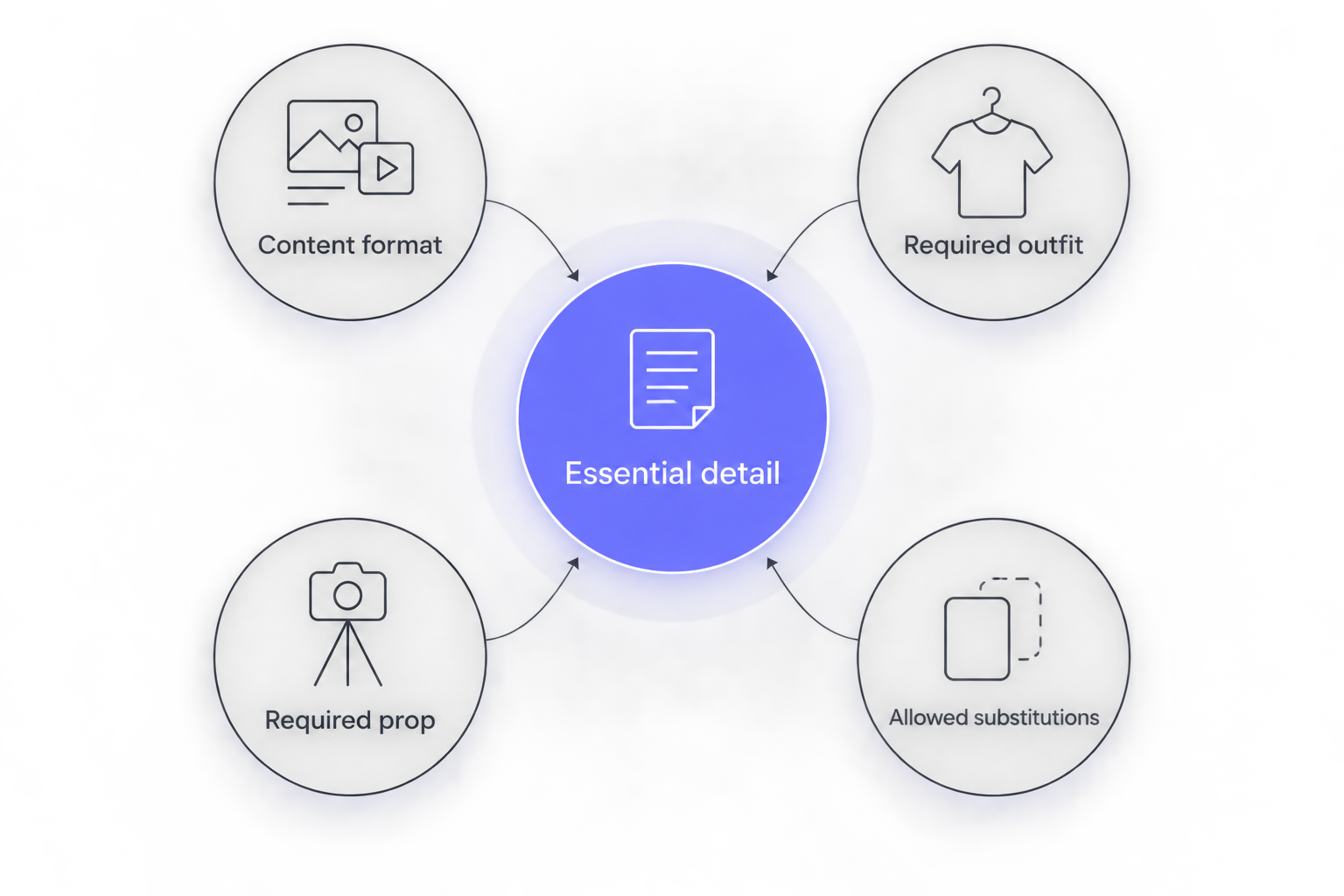
You do not need to fill every category with a demand. If there is no required prop, leave that part out. A short brief with a clear requirement is more useful than a long description that never identifies what matters most.
Describe appearance without assuming ownership
Ask whether the creator can include the item rather than writing as though the item is already part of the agreement. This applies even when you recognize it from a recent post.
A post shows what appeared in that content. It does not establish that the creator agrees to use the same garment or prop in your custom request.
Make substitutions explicit
If the color matters but the exact garment does not, state that distinction. If an alternative accessory would defeat the purpose of the request, say that no substitute meets your brief.
Do not describe a detail as optional when it determines whether you want the custom. Flexibility helps only when it reflects what you will actually accept.
How can you word an outfit or prop request clearly?
Use plain descriptions that separate the requirement from the fallback. The examples below illustrate wording only; they do not describe an actual creator’s wardrobe or promise that a request will be accepted.
When the exact outfit matters
Ask for the specific outfit you recognize, then describe its identifying features. Explain that a similar outfit would not meet the request and ask the creator to suggest changes before proceeding if the exact outfit cannot be included.
The benefit is precision: both sides know which detail decides whether the request works. The limitation is equally clear: if the creator does not agree to that outfit, the request needs to change or stop.
When the general look matters
Describe the features you care about, such as a blue jacket and a plain background, while explicitly allowing a different jacket in the same color. Avoid naming an exact garment if you do not actually require it.
This gives the creator room to propose an alternative. The trade-off is that you are agreeing to a description, not an exact recreation of a previous post.
When the prop is the main requirement
Name the prop and explain its visible role. If you want the object clearly shown, say that; merely mentioning it does not explain whether a background appearance meets your expectations.
Keep the clothing instructions secondary if clothing is not important. Otherwise, the main requirement can get buried beneath details you would willingly change.
Why agreement on props or outfits varies
The central question is whether your written proposal matches what the creator agrees to make. Check these factors before treating a response as confirmation:
- Exact item versus general style: A named garment is a different requirement from a broad look.
- Required versus optional details: Optional details should not become reasons to reject content later.
- Permission to substitute: A replacement needs to fit the flexibility you actually offered.
- The prop’s role: Being visible in the background is different from being a central part of the content.
- Photos versus video: State the format rather than assuming the creator will infer it from the outfit description.
- Suggested changes: A creator’s proposed revision can change whether the request still meets your needs.
Judge the proposal by its final details, not by your original mental picture. If a suggested change removes the reason you wanted the custom, resolve that before proceeding rather than hoping the original detail will appear anyway.
What should you check before submitting in 2026?
First, check that you are dealing with the creator you intended to contact. When arriving from Telegram or Reddit, review the profile’s history, compare handles with the creator’s X or Reddit account, check for bios that link to each other, look for warnings about fake accounts, and judge the quality of the posts.
Every creator on HedonCustoms passes ID verification through Veriff. That verification does not replace agreement about the outfit or prop: identity and request details are separate checks.
For prepaid requests, the bid is held from your balance as soon as you send the request. Do not treat creator acceptance as the point when a prepaid balance hold begins. If the creator declines, the refund is instant; Pay Later also exists.
Pay through the marketplace, where the money is held until delivery, rather than moving payment into a social conversation. Keep the practical decision simple: you need the right creator and a request that accurately states the content you want.
Does a creator have to recreate an outfit from an older post?
No. An older post is a reference, not an agreement to recreate the outfit. Identify the post and describe the important features in your request, then check whether the creator accepts that requirement or proposes something different.
Avoid assuming that recognition equals agreement. The creator understanding which outfit you mean is only the starting point.
Can you request matching props in photos and videos?
Yes, you can ask for a particular prop in either custom photos or a custom video. Select the intended format and describe how the prop should appear; do not assume that choosing an outfit also explains the requested format.
If you want to discuss both formats, make that intention explicit. Do not treat acceptance of one format as confirmation of another.
What if the delivered content uses the wrong outfit?
The 24-hour Content Dispute window is the period to raise a mismatch between delivered content and the agreed request. On HedonCustoms, disputes can end in a redo, with up to 2 redos, or a refund.
Compare the content with the agreed wording. If you allowed a similar jacket, a different jacket is not automatically a mismatch; if an exact garment was an agreed requirement, identify that requirement when explaining the problem.
For your 2026 request, make reviewing the outfit and props part of reviewing the content itself. A buyer can confirm early, which releases payment to the creator right away, so inspect the details before confirming.
FAQ
Can I ask a creator to wear a specific outfit in custom content?
How do I write a custom content request with specific props or outfits?
Should I let the creator choose a similar outfit?
Does a verified creator have to accept my outfit request?
When is my balance held for a prepaid custom request?
Can I dispute custom content if an agreed prop is missing?
Can I order custom photos rather than a video?
Related guides
- Do verified creators ever decline a custom content request?
- Can you get a refund if custom content doesn’t match your request?
- How to verify a Telegram creator before requesting custom content
Put the essential detail in the request
For a custom request in 2026, finish by checking the requirement that would change your decision to buy. If removing the prop or changing the outfit would make the content wrong for you, that detail belongs in the written request—not just in your expectations.
For adults aged 18 years and over, the next step is to describe the format, required items, and acceptable substitutions, then request a custom on HedonCustoms.